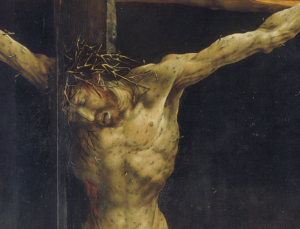
Isenheim Altarpiece (detail) / Matthias Grünewald
Polish composer Krzysztof Penderecki grew up under the heavy hand of communism and its socialist realism aesthetic. Like many Eastern Europeans of his generation, he looked to the West for inspiration and a sense of liberation from official dictates.
What he and many other like-minded composers found was the music of Karlheinz Stockhausen, Luigi Nono, Pierre Boulez, and other representatives of a generation of composers who grew up chafing under similarly oppressive Nazism and fascism.
As he commented later, this music gave the illusion of universalism, but strayed too far from the expressive qualities of Western music. Of course, his earliest works to attract international intention, including hisThrenody to the Victims of Hiroshima and St. Luke Passion, were written under the influence of these older composers.
They display, however, emotional qualities that have continued to earn them performances where most post-war avant-garde music has never been welcome. Composing the Passion further allowed Penderecki to express his devout Roman Catholic faith and thereby find yet another way to snub communist orthodoxy. Continue reading →


