↓
 

Musicology for Everyone

(Professional research for a general audience)

  • Home
  • About
  • Contact me
Home→Tags symphonies 1 2 3 4 >>

Tag Archives: symphonies

Post navigation

← Older posts

Symphony no. 3, Rhenish, by Robert Schumann

Musicology for Everyone Posted on October 12, 2024 by David GuionJanuary 28, 2026  
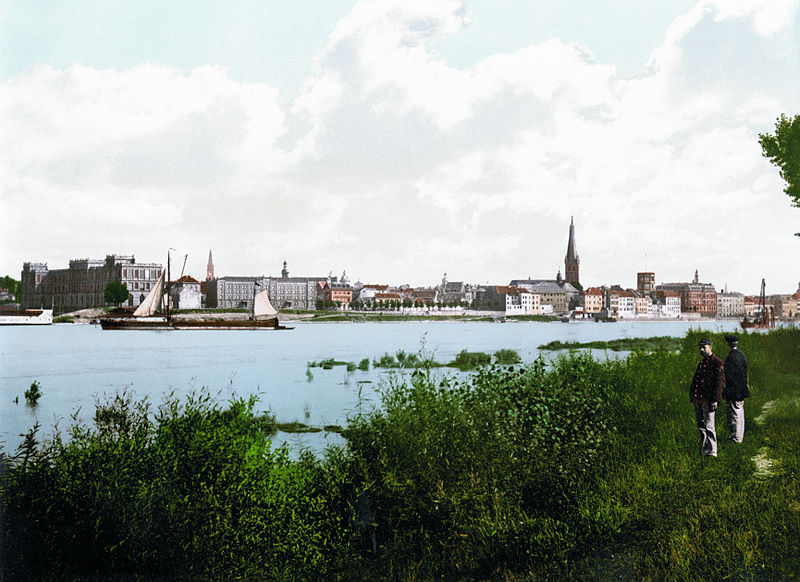
Dusseldorf, Rhine

Düsseldorf and the Rhine / between 1890 and 1905, via Wikimedia Commons

In all, Robert Schumann composed and published four symphonies. The last of them in order of composition is what is known as the Third Symphony, or Rhenish Symphony. His publisher had declined to accept the second of his symphonies. Schumann revised it in 1851 and so it was published as his Fourth Symphony.

The Rhenish Symphony acquired its nickname from letters to his publisher and some friends. In them, Schumann spoke of the Rhine River as his inspiration. Continue reading →

Posted in Program notes | Tagged Christmas music, classical music, composers, nineteenth century, program notes, Schumann (Robert), symphonies | Leave a reply

Symphony no. 6, Pastoral, by Ludwig van Beethoven

Musicology for Everyone Posted on February 10, 2024 by David GuionFebruary 10, 2024 2
Beethoven. Sixth Symphony

Beethoven in 1804, / Detail of a portrait by W. J. Mähler

Beethoven’s odd numbered symphonies have the reputation of being stormy and dramatic, while the even numbered symphonies seem more gentle and easy-going. For that reason, perhaps, the even numbered ones are less popular. Symphony no. 6, Pastoral, is easily the best known and most performed of the even numbered symphonies.

Beethoven worked on his Fourth, Fifth, and Sixth symphonies, among other major works, between 1806 and 1808. The latter two are the first of Beethoven’s symphonies with trombone parts.

Many symphonies and chamber works are known by nicknames that, more often than not, the composer never thought of. Beethoven himself supplied names for the Third Symphony (Eroica) and the Sixth (Pastoral Symphony, or Recollections of Country Life).

Continue reading →

Posted in Program notes | Tagged Beethoven (Ludwig van), classical music, composers, nineteenth century, program notes, Sixth Symphony (Beethoven), symphonies | 2 Replies

Symphonie fantastique by Hector Berlioz

Musicology for Everyone Posted on November 18, 2023 by David GuionNovember 18, 2023  
psychedelic art

Metaphysical Avangardism / Rivandori via Wikimedia Commons 

Ordinarily, we know symphonies as symphony number whatever in whatever key. If we know them by a nickname, such as “Bear” or “Jupiter,” the composer seldom supplied it. Hector Berlioz’ Symphonie fantastique broke all kinds of molds. For one thing, it is the first of four of his symphonies, but not a one bears a number, and only two have the word “symphony” in the title at all. How did he become such a bull in a china shop? Continue reading →

Posted in Program notes | Tagged Berlioz (Hector), composers, nineteenth century, program notes, symphonies | Leave a reply

Symphony no. 2, Lobgesang, by Felix Mendelssohn Bartholdy

Musicology for Everyone Posted on April 29, 2023 by David GuionApril 29, 2023  
Mendelssohn portrait. Lobgesang

Felix Mendelssohn Bartholdy / lithograph by Friedrich Jentzen for Allgemeine Musikalische Zeitung 39 (1837), after a painting by Theodor Hildebrandt via Wikimedia Commons 

Very often, when a symphony acquires a nickname, the composer has nothing to do with it. Think Mozart’s Jupiter or Tchaikovsky’s Little Russian, for example. On the other hand, Felix Mendelssohn Bartholdy composed Lobgesang (Song of Praise), and it became known as his Symphony no. 2 only after his death. He himself called it a symphony-cantata.

Lobgesang was among Mendelssohn’s most popular works during his lifetime. Although hardly neglected today, it remains one of his less-known major works. The duet “Ich harrete des Herrn” (I Waited for the Lord) for two sopranos and chorus, however, became a well-known standalone piece frequently performed by many church choirs.

After his death, his reputation plunged. Wagner’s screed “Judaism in Music,” with its assumption that Jews were incapable of true artistic understanding, led the attack. Mendelssohn was born Jewish, and it didn’t matter to antisemites that he was a devout Christian and proud German. Many critics, antisemitic and otherwise, saw Lobgesang only as a pale imitation of Beethoven’s Ninth Symphony.

Understanding Lobgesang, then, requires understanding of Mendelssohn as a religious person and what models he had in mind as he conceived the work. Continue reading →
Posted in Program notes | Tagged choral music, Mendelssohn (Felix), nineteenth century, program notes, symphonies | Leave a reply

Great C Major Symphony by Franz Schubert

Musicology for Everyone Posted on January 14, 2023 by David GuionFebruary 10, 2024 1
Gewandhaus concert hall. Schubert Great C Major Symphony

Interior of the Gewandhaus concert hall, 1845, location of the premiere of the Great C Major Symphony / Illustrirte Zeitung, 19. April 1845, p. 253  

Franz Schubert started at least ten symphonies and completed seven of them. The last completed symphony is known as the Great C Major Symphony to distinguish it from the shorter Sixth Symphony, also in C Major. It has been variously numbered 7, 8, and 9.

None of his symphonies were known in his lifetime. Why? Did the Viennese musical establishment callously neglect the young composer?

Generations of critics leveled that charge. But it seems that Schubert’s own insecurities kept him from even trying to gain an audience for his symphonies until very close to his death. Continue reading →

Posted in Composers, Program notes | Tagged classical music, composers, nineteenth century, program notes, Schubert (Franz), symphonies | 1 Reply

Symphony no. 8 in G major by Antonin Dvořák

Musicology for Everyone Posted on November 13, 2021 by David GuionNovember 13, 2021  

Statue of Antonín Dvořák in front of Rudolfinum in Prague, Czech Republic / Wikimedia Commons

Brahms is generally considered Beethoven’s chief successor as a symphonist, but a good case can be made for Antonin Dvořák. Most of Beethoven’s followers seemed to regard his middle period as a boundary beyond which they would not go. Dvořák’s Symphony no. 8 in G major, like most of Beethoven’s, charts new structural ground.

Dvořák’s music had an odd relationship with the Brahms wing of German music. Critics such as Edouard Hanslick held it in high esteem. But they believed that German composers represented the pinnacle of musical genius. Being Czech and not German, Dvořák only counted as a second-class citizen of their musical world. Continue reading →

Posted in Program notes | Tagged classical music, composers, Dvořák (Antonin), nineteenth century, program notes, symphonies | Leave a reply

Post navigation

← Older posts

Musicology for Everyone

Search by category

  • American popular music
    • Civil War music
    • Jazz
  • Anecdotes
    • Quotations
  • Bands and band music
  • Christmas music
  • Classical music
  • Composers
  • European musical history
  • Humor
  • Music education
  • Music Festival
  • Opera
  • Orchestras
  • Program notes
  • Trombone and other brass
  • Uncategorized

Archives

Music composer jobs
Footer HTML
©2026 - Musicology for Everyone - Weaver Xtreme Theme
↑