↓
 

Musicology for Everyone

(Professional research for a general audience)

  • Home
  • About
  • Contact me
Home→Author David Guion - Page 53 << 1 2 … 51 52 53 54 55 56 57 >>

Author Archives: David Guion

Post navigation

← Older posts
Newer posts →

Rossini on Wagner

Musicology for Everyone Posted on May 24, 2010 by David GuionMay 12, 2022 7
Rossini. idea of classical music

Rossini / Le Hanneton, July 4, 1867. 

Some scholars have theorized that Rossini retired from composing operas after Guillaume Tell because he disliked the direction opera was going and the kinds of things he had to write in order to maintain  his popularity. He became really upset with Wagner’s music. Two of his comments are very well known:

Wagner has lovely moments but awful quarters of an hour.

One cannot judge ‘Lohengrin’ from a first hearing, and I certainly do not intend to hear it a second time.

Those were his polite comments. Once he was talking with a singer about Wagner’s music when he decided to demonstrate what it sounded like. Opening the piano, he sat  heavily on the keyboard and said, “There! That’s the music of the future.”

Posted in Anecdotes, Composers | Tagged anecdotes, composers on composers, nineteenth century, opera, Rossini (Gioacchino), Wagner (Richard) | 7 Replies

Keeping the slide slick and slipping

Musicology for Everyone Posted on May 14, 2010 by David GuionMay 12, 2022  

Frank Holton's electric oilTrombonists are the only instrumentalists who have to push a pair of tubes as much as two feet along a pair of narrower tubes inside. They have a wide variety of choices for lubricating the slide–a variety of oils, creams, silicon.

And they discuss slide lubrication so much that sometimes they even bore each other. Oh no! Not another discussion of Slide-o-Mix™ vs Superslick™! (No need to panic now. That’s not where this is going!)

A recent discussion on Trombone-L, a popular email list, proved worthy of the attention to a wider audience both for its historical erudition and the way it touched on, shall we say, a variety of contemporary issues. Continue reading →

Posted in Trombone and other brass | Tagged humor, olive oil, slide lubrication, trombonists | Leave a reply

Niccolò Paganini: The devil’s violinist?

Musicology for Everyone Posted on May 10, 2010 by David GuionJanuary 28, 2020 2

Revised January 4, 2020

Niccolò Paganini became the world’s first international superstar of the violin. People wondered, could the brilliance of this eccentric, odd-looking man possibly be natural? Or did he have diabolical help?

Paganini could perform technical feats no other violinist could match. If anything, his showmanship was even more marvelous than his technique. The first virtuoso to perform from memory, he could move around the stage and interact with the audience.

In part, he could outdo other violinists because he invented new techniques such as left-hand pizzicato and various new kinds of bowing and tuning. Later violinists have learned them all. But he also had incredible joint flexibility and long fingers, which gave him a reach up and down the fingerboard that no one before or since has been able to match.

Apparently, the physiological uniqueness of his technique came from some kind of congenital condition like Marfan syndrome or Ehlers-Danlos syndrome. The nineteenth-century knew nothing of these conditions. Rumor had it that Paganini had sold his soul to the devil.

Other health conditions gave him a gaunt appearance. A serious illness in 1822 left him with a cadaverous pallor. In 1828, he had two operations on his jaws, which required the extraction of all his teeth. His international fame started a year later.

Whether from his medical conditions or his sense of showmanship, Paganini looked the part of an evil genius. Tall and pale, he had a long nose, long curly hair, and thin lips often formed into a sarcastic smile. Continue reading →

Posted in Anecdotes, Composers | Tagged anecdotes, nineteenth century, Paganini (Niccolò), violinists, virtuosos | 2 Replies

Past the last minute: Don Giovanni overture barely finished on time

Musicology for Everyone Posted on May 7, 2010 by David GuionAugust 13, 2019 7

Don Giovanni, statue of CommendatoreRevised August 10, 2019

When an opera performance starts, the overture is the first thing the audience hears, but it’s the last thing the composer writes. Rossini disliked writing overtures, and the various impresarios he worked for had legendary difficulties keeping him on track. Mozart had no such aversion to overtures. Nonetheless, composing the overture to Don Giovanni produced a drama equal to any story about Rossini. Continue reading →

Posted in Anecdotes | Tagged anecdotes, Don Giovanni, eighteenth century, Mozart (Wolfgang Amadeus), opera, overtures | 7 Replies

Gianni Schicchi by Giacomo Puccini

Musicology for Everyone Posted on April 30, 2010 by David GuionMay 12, 2022  
Puccini. Claudio Monteverdi 450th anniversary

Giacomo Puccini in 1908.

Puccini was born into Lucca’s most prominent musical family, a dynasty that began with his great-great-grandfather. Only the Bach dynasty (seven generations) lasted longer than the Puccini dynasty. Although Puccini was only five when his father died, everyone assumed that he would eventually take over the now hereditary position of organist and music director at San Martino Cathedral. Instead, he turned away from church music and devoted his life to opera.

He always had trouble finding suitable librettos and even more trouble once he had them. He started and abandoned as many operas as he completed. In 1913, he decided to compose a set of three one-act operas, to be called Il trittico.

Of all of his original ideas, he completed only Il tabarro. His eventual choices for companion pieces, Suor Angelica and Gianni Schicchi, are his only works written (by librettist Giovacchino Forzano) as operas and not adapted from an earlier stage play. Additionally, Gianni Schicchi is his only comic opera. Continue reading →

Posted in Program notes | Tagged Gianni Schicchi, opera, program notes, Puccini (Giacomo), Trittico | Leave a reply

Easter Parade, by Irving Berlin

Musicology for Everyone Posted on April 5, 2010 by David GuionMay 29, 2024 3
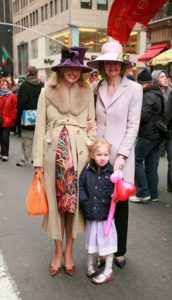
Easter parade participants

Participants in New York City’s Easter Parade, 2007 / Wikimedia Commons

Revised April 9, 2022

Perhaps the most popular Easter song in the English language, “Easter Parade” started out with completely different words. In 1917, Berlin wrote “Smile and Show Your Dimple” to cheer up women whose men had just been deployed to fight in the First World War. No one remembered it very long except Berlin himself.

He later explained, “A song is like a marriage. It takes a perfect blending of the two mates, the music and the words, to make a perfect match. In the case of “Easter Parade,” it took a divorce and a second marriage to bring about the happiest of unions.” Continue reading →

Posted in American popular music | Tagged "Easter Parade", American popular song, Berlin (Irving), songs, twentieth century | 3 Replies

Post navigation

← Older posts
Newer posts →

Musicology for Everyone

Search by category

  • American popular music
    • Civil War music
    • Jazz
  • Anecdotes
    • Quotations
  • Bands and band music
  • Christmas music
  • Classical music
  • Composers
  • European musical history
  • Humor
  • Music education
  • Music Festival
  • Opera
  • Orchestras
  • Program notes
  • Trombone and other brass
  • Uncategorized

Archives

Music composer jobs
Footer HTML
©2026 - Musicology for Everyone - Weaver Xtreme Theme
↑